April 24, 2025, Reflections

All right. What am I thinking about today in terms of writing? Odds and ends, mostly.

My new collection, The Great Forest and Other Love Stories (see Publications for more information) wass published back in November 2024. I was pleased with the reviews and responses. I am eagerly awaiting the release of the print edition. A story, “In Love’s Light,” was published in January 2025 in Love is Free, a JMS Books Author charity anthology. All benefits go to the ACLU. This anthology is meant to be a celebration of queer love and thus in these uncertain times in which we find ourselves, is an act of resistance. But then, I think such stories always have been and will be, for some time to come.

Right now, I am awaiting to hear from my beloved free-lance editor, Ellen McQueen, on “Chocolate Seven,” and then, “The Smell of Good” (although that title needs some work, I think). Both are part of a collection-in-progress about shapeshifters. In addition, I am working 2 more stories about werewolves. One is an expanded version of “In Love’s Light,” and the other, the postscript or continuation/what happens next to The Werewolf and His Boy. Both need a lot of work.

I am both scared and worried about the current politics in the US and the ongoing debacle in Washington. I am also hopeful, as the number and size of the current protests increase each time. Where are we going, what lies ahead. Will Trump fall–the sooner, the better.

So, I keep writing. Writing is an act of resistance.

July 6, 2024

Shameless Self-Promotion2

Sigh. My intentions were good. I had intended to write a lot of these Shameless Self-Promotions since the last one. That didn’t happen. So let’s try again:

Today, I want to revisit my first story collection, The Wicked Stepbrother and Other Stories:

This collection began as a sabbatical project, my last one, when I was working as an English professor at the University of Mary Washington. The project was to explore the rhetoric of gay retellings of traditional Western fairy tale, and to write gay retellings. I picked because those are the ones with which I grew up. They are an essential part of the metaphoric sea in which I swim. These tales are deeply embedded in our culture, our language, and shape our thoughts and perceptions. Most people know what an ugly duckling is, or a Cinderella story, a Sleeping Beauty. I started the project by immersing myself in fairy tales and fairy tale criticism. To make things simpler, at the end of this reflection I have included the Works Cited and Consulted bibliography andOther Suggested Readings that is in the collection. I didn’t include here the essay I wrote on the rhetoric of gay retellings, but that’s in the book, too.

Anyway, this collection was a labor of love, and I am proud of it. Below is a excerpt from one of the tales. Please, I invite them all!

Finroc macFinniel Silmairë

With thanks to Sylvia Kelso and Ellen McQueen

            I look for him by the river, where I always found him, where he always found me. I call his name: Finn. I hear him humming that tune…

            “Get up.”

            Killian jerked awake. His father stood by his bed, a guard on either side.

            “Get dressed. You’re getting married,” his father snapped.

            “What? Are you joking?”

            His father made a quick, sharp gesture and the guards, their faces expressionless, stepped back and out of the bedroom, softly closing the door behind them. “My heir. A weakling man-lover. A fairy-lover,” his father said, grimacing in distaste. Yes,” he snarled, “Today. Get dressed. This woman gave us gold; I promised her a royal husband in exchange,” he said, his voice cold and hard. “Gods, if your brothers were alive, we wouldn’t be having this conversation.”

            Killian sat up, careful to keep his lower body covered. The erection he always had after that dream had subsided, but even so he had no desire to be naked in front of his father and hear more snide remarks about how he wasn’t like his older brothers, Alistair and Lachlan.

            He stared hard at the king, trying to remember when he was very little and had loved this man. He couldn’t.

            “If Finn were here—ˮ

            The king slapped him across the face. “Don’t mention that name in the same breath with your brothers. Get up and get dressed.”

            “Get out of here if you want me to get dressed,” Killian muttered, wiping blood off his mouth.    

            “The garden, in an hour,” his father said as he left the room.

            If he hadn’t made that promise to Finn, Killian would have left years ago. The promise hadn’t included marriage to a woman, but then, it hadn’t included his father catching him and Finn down by the river, either. He and Finn were to be together forever. Killian pushed away the lasting grief. He had to dress for his wedding.

***

            Killian first met Finroc macFinniel Silmairë when he was ten, by the river in the park behind the palace late one August afternoon. He knew Finn was a fairy. Finn looked just the way his grandmother had described the fey in her stories: the pointed ears, feline-shaped eyes, fire hair, the faint glow under his skin. Killian told no one, but his grandmother, his best friend was a fairy. Even for the king’s son, this was dangerous. People like his grandmother hid their reverence for the fey. The iron laws were strictly enforced; violations meant the death penalty. But the gifts and the offerings were still left in the stone circles.

            He told no one at all when, at seventeen, his best friend became his lover. He had felt guilty at first; it had been just after Alistair’s death. But Alistair, he knew, would want him to be happy, and Killian and Finn were happy—until Lachlan’s assassination three years later changed everything.

            The king ordered new security for the prince, including armed guards and watchers. Finn and Killian were found out one warm summer night, Lughnasadh, the air close, the shadows green and black, the cicadas trilling. After the services at the standing stones, Killian had let Finn into the palace by a forgotten back door made entirely of wood. They had gone to his apartment, thanking the gods it was a labyrinth of corridors and staircases away from the king.

            We lay together, whispering in the darkness. He told me our meeting as little boys had been arranged. The fairy queen wanted to repair the rift and ease the mutual distrust between fey and mundane. Before she could ask others to volunteer their children for this experiment, she sent her own child, her fourth son.

            Falling in love hadn’t been part of the plan. The queen had wanted Finn to stay away then, the risk was too great. She feared King Aloysius too much. He told her he couldn’t leave me.

             I promised him when I became King, I would fix things. Together we would heal the country.

            A guard had seen them go into Killian’s room together. The king, with his necromancer, caught them two nights later, down by the river.

***

            Now, the promise includes marriage with a woman. If Father’s necromancer hadn’t cursed him, then Finn wouldn’t have cursed him back—and then Father could marry this gold-producing woman himself. Even so, I still wouldn’t have Finn.

            At least the counter-curse had both made the king sterile and given the necromancer a fatal wasting disease.

             Killian sighed as he walked out into the palace gardens.

            The roses were blooming; the air was heady and sweet with fragrance. “This Caroline Rose Maclaren—she may be a miller’s daughter and kind of plain, but, I assure you, she has a special gift,” his father whispered to him as they waited for her by the palace shrine, with the priest, in his silver and white robes, standing behind them. Killian shrugged; he had no idea what to say to his father.

            “Here she is, took them long enough to get her ready,” his father snorted.

            The bride carried a bouquet of small white roses and wore a coronet made of yellow and pink roses, a white dress, and the traditional iron necklace to ward off fairy kidnappings. Killian wore the matching groom’s necklace.

            There were stories of fairies stealing a bride, a groom, if no offerings were left. Other stories told of one lover being taken out of spite. The king believed the stories.

            Her father walked with her. Killian could tell that Caroline Rose was supporting the old man, who almost fell twice crossing the garden. When he presented Caroline Rose to him, Killian could smell why: the old man was drunk. He glanced at his father. It didn’t matter. He could tell the king was overjoyed to be watching his youngest son marry.

            There was no celebration of any kind. Killian didn’t even get a chance to speak with her until that night. He had hesitated at the bedroom door, the king’s commands still echoing in his head, then he reminded himself he had promised Finn. To keep that promise he had to become king. The only way to become king was to survive whatever his father demanded of him.

            Killian found Caroline Rose sitting on the bed, dressed in a gauzy nightgown sprinkled with tiny gold stars. Her long brown hair had been unbraided and brushed until it glowed. Scarlet rose petals had been scattered on the bed and the floor.

            She looked absolutely terrified.

            “I’m scared, too,” Killian said as he sat down in an armchair.

            “You look just like King Aloysius. The same dark hair and eyes, the same eyebrows.”

            Killian shrugged. “I do look like my father. You, on the other hand, look nothing like yours.”

            “I favor my mother,” she said with a small smile.

            “My older brothers favored our mother. What is this gold Father keeps talking about?” Killian asked and smiled back.

            Caroline Rose looked down at the floor, as if the answer had been written in the wood. “I can spin straw into gold. I could, I mean—only seven times. I can’t do it anymore.”

            “Straw into gold? Really?” he asked, as he stared at her ….

Works Cited and Consulted

Bear, Joy Bethany. “Struggling Sisters and Failing Spells: Re-engendering Fairy

Tale Heroism in Peg Kerr’s The Wild Swans.” Fairy Tales Reimagined: Essays on New Retellings. Ed. Susan Reddington Bobby. Jefferson, NC: McFarland, 2009: 44-57. Print.

Benson, Stephen. “Introduction: Fiction and the Contemporaneity of the Fairy Tale.” Contemporary Fiction and the Fairy Tale. Ed. Stephen Benson. Detroit: Wayne State UP, 1-19. Print.

Cinderella Story: Around the World” KidWorldCitizen Kid World Citizen, 2011. October 11, 2012. Accessed February 23, 2015. Online.

Coles, Robert. The Call of Stories: Teaching and the Moral Imagination. Boston: Houghton Mifflin, 1989. Print.

De La Rochère, Martine Hennard Dutheil. “Queering the Fairy Tale Canon:

“Emma Donoghue’s Kissing the Witch.” Fairy Tales Reimagined: Essays on New Retellings. Ed. Susan Reddington Bobby. Jefferson, NC: McFarland,

2009: 13-30. Print.

Donoghue, Emma. Kissing the Witch: Old Tales in New Skins. New York:

HarperCollins, 1997. Print.

Fone, Byrne R. S. “E.M. Forster (1879-1970).” The Columbia Anthology of Gay Literature: Readings from Western Antiquity to the Present Day,

Ed. Byrne S.F. Fone. New York: Columbia UP, 1998 350-351. Print.

Ford, Michael. “Introduction.” Happily Ever After: Erotic Fairy Tales for Men. Ed. Michael Ford. New York; Masquerade Books, 1996: 1-4. Print.

Grimm, Jakob and Wilhelm. The Complete Grimm’s Fairy Tales. Introduction by Padraic Colum. New York: Pantheon Books, 1944. Print.

Jay, Karla. “Lavender menace becomes a magical term.” The Gay & Lesbian Review 26.3 (May-June 2019): 26-29. Print.

Jones, Steven Swann. The Fairy Tale: the Magic Mirror of the Imagination. New York: Routledge, 2002. Print.

Joosen, Vanessa. Critical & Creative Perspectives on Fairy Tales: An Intertextual Dialogue between Fairy-Tale Scholarship and Postmodern Readings. Detroit: Wayne State UP, 2011. Print.

Le Guin, Ursula K. “Are they going to say this is fantasy?” Book View Café Blog. Book View Café. 2 March 2015. Accessed 10 March 2015. Online. http://bookviewcafe.com/blog.      

—. “Where Do You Get Your Ideas From?” Dancing at the Edge of the World: Thoughts on Words, Women, Places. New York: HarperCollins, 1989: 192-200. Print.

Meeker, Lloyd A. “Essential differences in a gay Hero’s Journey-Part One.” Lloyd A. Meeker. 2011. Accessed February 2015. Online. Lloydmeeker.com.

Mercer, Elliot Gordon. “’The Grave Mound’: A Queer Adaptation.” Transgressive Tales:

            Queering the Grimms. Eds. Kay Turner, Pauline Greenhill. Detroit: Wayne State

UP, 2012: 295-302. Print.

Rochelle, Warren. “Happily Ever After.” Quantum Fairy Tales 9 (Fall 2014): Unpaged Quantum Fairy Tales. Quantum Fairy Tales. Online. http://quantumfairytales.com.

Salih, Sara. Judith Butler. New York: Routledge, 2002. Print.

SurLaLune Fairy Tales Discussion Board” Archival String. SurLaLune Fairytales,com. June 2007. Accessed 18 February 2015. Online. http://www.surlalunefairytales.com.

Turner, Kay, and Pauline Greenhill. “Introduction: Once Upon a Queer Time.” Transgressive Tales: Queering the Grimms. Eds. Kay Turner,Pauline Greenhill. Detroit: Wayne State UP,2012: 1-24. Print.

Turner, Kay, and Pauline Greenhill. “Preface.” Transgressive Tales: Queering the Grimms. Eds. Kay Turner, Pauline Greenhill. Detroit: Wayne State UP,2012: vii-ix. Print.

Wakefield, Lily. “Queer Folklore was erased from history by homophobes, but one ‘fabulously gay’ fairytale has survived.” PinkNews (21 August 2020). Unpaged. Accessed August 2020. http://www.pinknews.co.uk.

Zipes, Jack. Breaking the Magic Spell: Radical Themes of Folk & Fairy Tales. Rev. expanded ed. Lexington, KY: UP of Kentucky, 1979, 2002. Print.

Suggested Other Readings

Note: This list is not meant to be comprehensive. I know there are many other sources that could be included. Rather, the readings below happen to be the ones I have at home or in my office and have accumulated over the years. This list is personal and idiosyncratic.

Anderson, Hans Christian. The Complete Fairy Tales and Stories. Transl. Erik Christian Haugaard. New York: Anchor Books/Random House, 1974, 1985. Print.

Belting, Natalie M. Cat Tales. New York: Holt, Rinehart, and Winston, 1959. Print.

Bernheimer, Kate, ed. XO Orpheus: Fifty New Myths. New York: Penguin Books, 2013.  Print.

Bernheimer, Kate and Carmen Gimenez, Smith, eds. My Mother She Killed Me, My Father He Ate Me. New York: Penguin Books, 2010. Print.

Bobby, Susan Redington, ed. Fairy Tales Reimagined Essays on New Retellings. Jefferson, NC: McFarland, 2009. Print.

Cashorali, Peter. Fairy Tales: Traditional Stories Retold for Gay Men. New York: HarperCollins, 1995. Print.

___. Gay Fairy and Folk Tales: More Traditional Stories Retold for Gay Men, Boston: Faber and Faber, 1997.

Datlow, Ellen, and Terri Windling, eds. Snow White, Rose Red. New York: William Morrow, 1993. Print.

___. Black Thorn, White Rose. New York: William Morrow, 1994. Print.

___. Ruby Slippers, Golden Tears. New York: William Morrow, 1995. Print.

___. Black Swan, White Raven. New York: William Morrow, 1997. Print.

___. Silver Birch, Blood Moon. New York: William Morrow, 1999. Print.

___. Black Heart, Ivory Bones. New York: William Morrow, 2000. Print.

___. The Faery Reel: Tales from the Twilight Realm, New York: Firebird, 2006. Print.

___. The Green Man: Tales from the Mythic Forest. New York: Viking, 2002. Print.

Del Rey, Lester, and Risa Kessler, eds. Once Upon a Time: A Treasury of Modern

            Fairy Tales. New York: Ballentine Books, 1991. Print.

Duffy, Maureen, The Erotic World of Faery. London: Hodder and Stoughton, 1972. Print.

Gaiman, Neal. The Sleeper and the Spindle. New York: HarperCollins, 2013. Print.

Garner, Alan. Alan Garner’s Book of British Fairy Tales. New York: Delacorte Press, 1984.Print.

Griffith, Nicola, and Stephen Pagel, eds. Bending the Landscape: Fantasy. Woodstock, NY: Overlook Press, 2004. Print. 

Griswold, Jerry. The Meanings of Beauty and the Beast: A Handbook. Guelph, Ontario: Broadview Press, 2004. Print.

Hearn, Michael Patrick, ed. The Victorian Fairy Tale Book. New York: Pantheon Books, 1994. Print.

Jarrell, Randall, trans. Nancy Ekholm Burkett, illus. Snow White and the Seven Dwarfs. New York; Farrar, Straus, and Giroux, 1972.

Kerven, Rosalind. English Fairy Tales and Legends. London: The National Trust, 2008. Print.

Lang, Andrew, ed. Blue Fairy Book. New York: MJF Books, 1994, first published, 1889. Print.

___. Red Fairy Book. New York: MJF Books, 1994, first published, 1890. Print.

___. Green Fairy Book. New York: Dover, 1965, first published, 1892. Print.

___. Yellow Fairy Book. New York: Dover, 1966, first published, 1894. Print.

___. Pink Fairy Book. New York: Dover, 1967, first published, 1897. Print.

___. Gray Fairy Book. New York: Dover, 1967, first published, 1900. Print.

___. Violet Fairy Book. New York: Dover, 1966, first published, 1901. Print.

___. Crimson Fairy Book. New York: Dover, 1967, first published, 1903. Print.

___. Brown Fairy Book. New York: Dover, 1965, first published, 1904. Print.

___. Orange Fairy Book. New York: Dover, 1968, first published, 1906. Print.

___. Olive Fairy Book. New York: Dover, 1968, first published, 1907. Print.

___. Lilac Fairy Book. New York: Dover, 1968, first published, 1910. Print.

Larrington, Carolyne. The Land of The Green Man: A Journey through the Supernatural Landscapes of the British Isles. London: I.B. Tauris, 2015. Print.

Lee, Lisa. Welsh Tales for the Fireside. Llandysol, Ceredigion, Wales: Gomer Press, 1998. Print.

Maitland, Sara. Gossip from the Forest: The Tangled Roots of Our Forests and Fairy Tales. London: Granta, 2012. Print.

Marcus, Leonard, ed. The Wand in the Word: Conversations with Writers of Fantasy. Cambridge,MA: Candlewick, 2006. Print.

Mayer, Marianna. Iron John. New York: Morrow, 1999. Print.

McKinley, Robin. Beauty: A Retelling of the Story of Beauty & the Beast. New York: HarperCollins, 1978. Print.

___. Deerskin. New York: Ace Books, 1993. Print.

___. Rose Daughter. New York: Ace Books, 1997. Print.

___. Spindle’s End. Newe York: G. P. Putnam’s Sons, 2000. Print.

Mendlesohn, Farrah. Rhetorics of Fantasy. Middletown, CT: Wesleyan Press, 2008. Print.

Pullman, Philip. Fairy Tales from the Brothers Grimm. New York: Penguin, 2012. Print.

Purkiss, Diane. At the Bottom of the Garden: A Dark History of Fairies, Hobgoblins, and Other Troublesome Things. New York: New York University Press, 2001. Print.

Scottish Fairy Tales. London: Bracken Books, 1993. Print.

Thomsen, Brian, ed. The American Fantasy Tradition. New York: Tor, 2002. Print.

Undset, Sigrid, ed. True and Untrue & Other Norse Tales. New York: Knopf, 1967. Print.

Von Schönwerth, Franz Xaver. The Turnip Princess and Other Newly Discovered Fairy Tales. Ed. Erika Eichenseer. New York: Penguin Books, 2015. Print.

Warner, Marina. From the Beast to the Blonde: On Fairy Tales and Their Tellers. New York: Farrar, Straus and Giroux, 1994. Print.

Williamson, Duncan. Tales of the Seal People: Scottish Folk Tales. Brooklyn, NY: Interlink Books, 2005. Print.

Windling, Terri, ed. The Armless Maiden and Other Tales for Childhood’s Survivors. New York: Tor, 1995. Print.

Wood, Pete Jordi. The Dog & the Sailor. Pete Jordi Wood, 2020 http://www.petejordiwood.com.

Zipes, Jack, ed. The Outspoken Princess and the Gentle Knight: A Treasury of Modern Fairy Tales. New York: Bantam Books, 1994. Print.
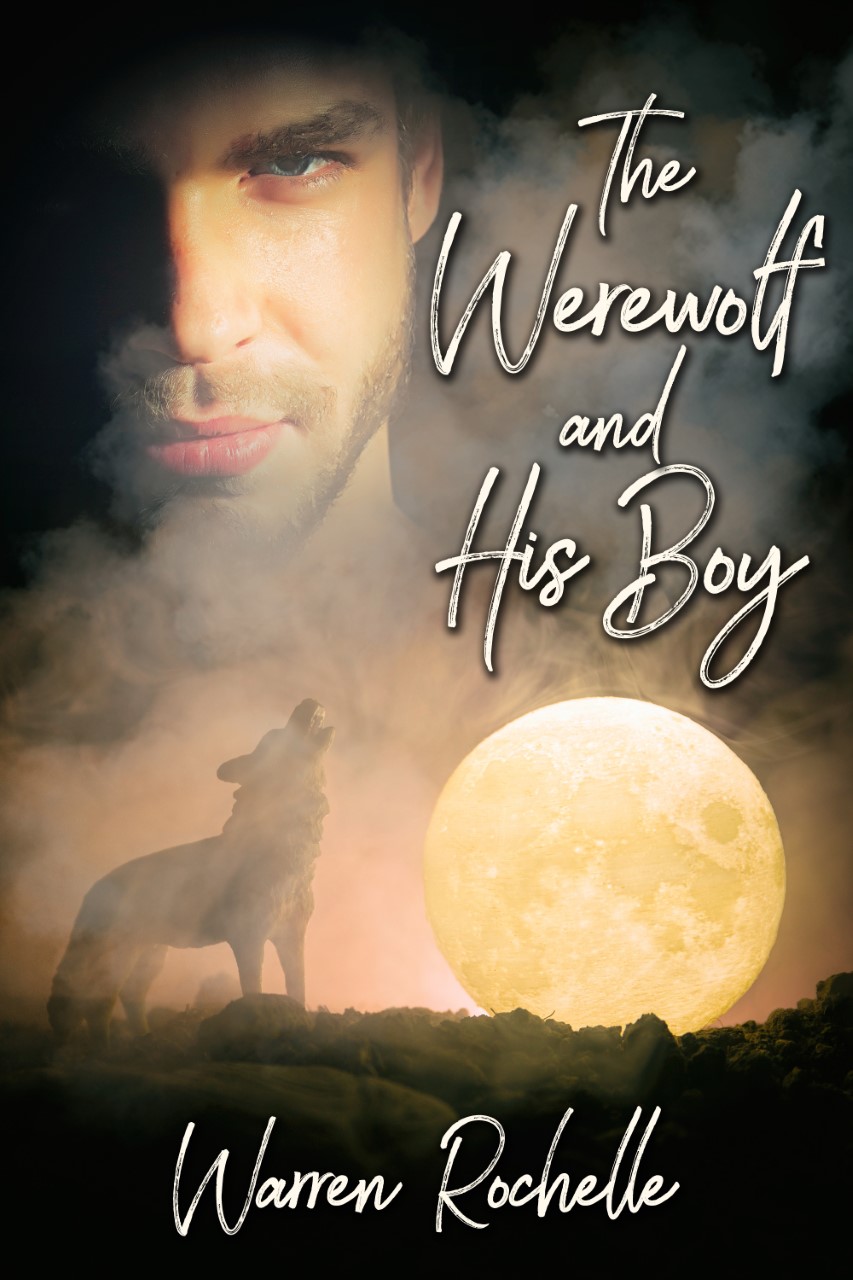
Revisiting Backlist Titles or Shameless Self-Promotion #1 February 2024

I decided it would be a good idea to feature backlist titles, in case you may have missed them.

Today: The Werewolf and His Boy

The Werewolf and His Boy was first published by the late and lamented Samhain Publishing, in 2016, and re-released in by JMS Books in 2021. The novel is a fantasy and a love story, set in a world in magic is real, as are magical beings, such as werewolves. These beings were created by the old gods as their Pets and amusements. When the gods left Earth, they set Watchers in place to protect the Pets by suppressing magical knowledge, and making knowledge of any kind hard to obtain. The Pets must be kept a secret. Witches were forced in hiding. Henry Thorn is the son of a werewolf but doesn’t know it. Jamey Currey is the descendant of the old gods, and doesn’t know this either. They meet, fall in love, and secrets wake up. Complications ensue. The Watchers are after them; a kind witch, Dr. Melloy, or Dr. M, helps them.

The original idea came from a dream my husband-then-boyfriend had, after many trips to Lowe’s in Richmond, Virginia, when he was fixing up his new townhouse. He dreamed of a monster in the rafters who came down at night. He told me his dream and I wrote “Lowe’s Wolf, which was published in the also late and lamented Icarus: The Magazine of Gay Speculative Fiction, in Spring 2010. In this version, Henry was named Harry. Dr. M was Dr. Mulligan. The Watchers hadn’t yet made an appearance.

Henry, Jamey, and Dr. M, the diabolical Watchers, and other minor characters are all present in the 2016 Samhain Publishing edition. Lowe’s is Larkin’s. And a lot more happens and a great deal more is at stake. Henry and Jamey’s relationship threaten to disclose the reality of magic, and put the Pets at risk. Their kiss has awakened the Watchers. These diabolical hunters will stop at nothing, including extermination, to keep magic suppressed. Dr. M and other witches tell them of an prophecy that only a Pet and a godling can discover an ancient key to restore magic to the world. Can it be found in time? Will they begin to understand the mystery of their own hearts?

But Samhain didn’t make it. In 2020, I submitted the novel, with only a few changes, to JMS Books, based in Colonial Heights, VA, and in 2021, Henry and Jamey were back.

What next?  Will the old gods come back? How’s the world doing with magic restored? Will Henry and Jamey survive in this brave, new, and still very dangerous world? I have outlined a sequel, four chapters have been completed. Stay tuned.

Review of The Pull of the Stars. by Emma Donoghue

Jun 23, 2023

Wow.
This is a beautiful and heartbreaking story of the influenza epidemic 0f 1918 in Ireland. At the same time, World War I is being fought in Europe. It is told from the POV of a nurse on the frontlines. Julia Power works “at an understaffed hospital in the city center of [Dublin], where expectant mothers who have come down with the terrible new flue are quarantined together” (back cover). There are no vaccines. Julia’s world is one of death, and rules, and struggle.

Into her world, come two other women who change everything for her: “Kathleen Lynn, a doctor rumored to be a Rebel on the run from the police, and Bride Sweeney, a young volunteer helper” (back cover).

The narrative covers three days, days of loss, change, and birth, and love. It’s intense and compelling.

Highly recommended.

Review of Balancing the Weave, by Marshall Wayne Lee

Balancing the Weave

By M.W. Lee (aka Marshall)

Colonial Heights, VA: JMS Books, 2023

Anansi, god of the storytellers, has a story to tell.

The gods have never left humanity and some have moved with humans, across continents, across oceans, transforming themselves as human cultures changed and transformed over time and place.

They are still looking after us, even if we no longer believe, having relegated them to myth and dreams. In Balancing the Weave, the Three Fates, here reimagined, as the Triumvirate Sisters, Clotho, Parcae, and Moirae, still “weave tapestries in the colors, lengths, and patterns which suggest themselves to the Sisters’ discerning eyes,” These goddesses “decide who a person might  become .. [as] Humans always choose from the opportunities the goddesses present.”

In this story, the Sisters are interested in the life of Mark, a young gay man in fictional Yamasee County, in South Carolina. The goddesses are displeased with Mark, who has become a selfish and self-centered lover. His last breakup was hurtful, and he is convinced himself the blame rests entirely on his ex. They want to offer him another choice, a new pattern, but he needs to grow, and realize his role in the breakup.  He must “comprehend neediness.” I would argue he needs to grow up. Mark is denial of the truth of his actions and their consequences, and the limitations of his friends who are shallow and self-centered.

The work of the goddesses, through dream and memory, begins on Pride Weekend. Will Mark see he shares the blame? Can he accept he may be fault? Will he see that he needs to grow up?

I didn’t find Mark likeable at first, but I found myself cheering him on as he started to tell himself the truth. Growth is sometimes painful, even as it is necessary. There is hope that Mark might come to recognize that with love comes mutual respect, responsibility, and caring, and that we are all needy in one way or another.

This a well-told tale indeed. 

Recommended.

Posted: 12 March 2023

2022: Reflections on Writing

January 12, 2023

I wanted to start what I hope will be the first of many annual reflections on my writing in the past year with an interview posted on January 8. J. Scott Coatsworth, founder and administrator, with Mark Guzman and some others, of Queer Sci Fi and Liminal Fiction. Scott and Mark are also the founders of Other Worlds Ink, which provide such services as blog tours, and this spotlight below. I highly recommend the blog tours, and, signing up for a spotlight! They are good folks indeed.

This Author Spotlight got a surprising amount of attention and positive responses. Scott did post it on various Facebook group pages, such as LGBT Writers, Queer SF, his blog, SF fan groups, and so on. Sales, I don’t know yet. But, interest was sparked.

This brings me to the three writing highlights of the year: the publications of In Light’s Shadow: A Fairy Tale, in September, “Ghosts,” a flash fiction shorty story, in October, and of Susurrus, a stand-alone novella, in November.

In an earlier reflection (see below) I have written about In Light’s Shadow‘s writing history, starting back in 2003, when the short story, “The Golden Boy,” was published in The Silver Gryphon (Golden Gryphon Press, 2003). In January 2022, as mentioned in the earlier post, I sent off the novel to a press in Canada, Mirror World Publishing. They asked for 3 more chapters–which makes any writer cautiously optimistic and excited. The rejection letter was 3 pages long. I took it to heart, in the spirit in which it was written. More revisions, then even more, with an amazing free-lance editor I know (who happens to be my best friend), Ellen McQueen.

We worked on revising the novel for several months. This was an immense amount of fun and hard work. We discussed characters and their motivations, their authenticity, and believability. We discussed idea and metaphor and trope. Pages of text from the Mirror World version were edited out. We discussed the world of the novel, the Columbian Empire. We talked about telling the truth, the job of any writer and editor. Our finished work was sent to JMS Books, my publisher. More revisions, another editor with a different eye. Art work and blurbs and proofreading and proofreading and proofreading, and the novel was published in September in ebook format, in paperback in October.

Sigh. Even with that much proofreading, yes, there were published mistakes. But not big, plot holes, thank God. One reviewer did ask where were the “good Columbians,” like the “Good Germans” in World War II? A fair question and while I know they were there, and helping the persecuted fairies, as they risked (and sometimes lost) their own lives, I could have, and should have, made it more explicit. All that said, I am proud of this book.

Susurrus came out in November. Like Light’s, this stand-alone novella grew out of a shorter work, in this case, “Ghosts,” a flash fiction short story also published, in 2022, in Clarity: Queer Sci Fi’s NinthAnnual Flash Fiction Contest (Other Worlds Ink).

The writing prompt for the contest is as follows: Clarity (noun): 1) coherent and intelligible; 2) transparent and pure; (3) attaining certainty about something; and (4) easy to see or hear. The 300-word stories, Clarity-themed, SF, fantasy, paranormal, or horror, with LGBTQ+ characters. I went with 2. Transparent, ghosts are transparent, what if people were becoming ghosts and were still alive, if something had happened to turn them transparent, a disease, maybe, but nobody knew for sure. I followed two characters, two gay men, a married couple, Russell and Theo, as the disease progressed.

I was pleased when “Ghosts” earned an Honorable Mention in the flash fiction contest.

Like many of my stories, I found myself wanting to know more about my characters, and the world in which they lived. What happened next to Russell and Theo? How did they get this disease? Where did the disease come from? Was it human-made? So, I started a longer version in response to a call for stories from JMS Books. Every year, the press holds an Advent Calendar Sale, a free story (12,000-20,000 words) for each day of Advent. The world of the flash fiction story, I knew. It was a world I have explored in several stories, particular those in The Wicked Stepbrother and Other Stories (JMS Books, 2021). This fantasy world grew over the years, and has its own timeline, dynastic lists, and so on.

Russell and Theo lived in the Kingdom of Lothia, north of Joria, in a small city in the north, Ciara. I learned more about them, such as their past, families, details of their jobs, and so on. And I learned more about the ghost disease. It was not natural, but rather magical disease made by the royal magician, Varon Cambeul, at the request of his lover, King Aloysius of Lothia. And to my surprise, this longer story, Susurrus, was not about Russell and Theo, but Varon. Pause, reset, shift, edit, revise, proofread several times, work with an editor–and Susurrus was published in November. The title refers to a stage of the ghost disease, when the afflicted become like a susurrus (noun: whispering, murmuring, rustling, ex. the wind in trees).

I like this story a lot. So, those are the highlights of my year in writing, 2022. This year, I am working on a new story collection, of which Susurrus will be a part, the sequel to In Light’s Shadow: A Fairy Tale, and, I hope, getting a good start on the sequel to The Werewolf and His Boy (JMS Books, 2021, a re-release of the 2016 Samhain Publishing edition).

2022 was a good year. Onward!

Review of The Laran Gambit, by Marion Zimmer Bradley, Deborah J. Ross

San Francisco, CA: Marion Zimmer Bradley Literary Works Trust, 2022 Available from Publisher, Amazon, Barnes & Noble, Kobo, Apple Book, Audible, and other sources

November 23, 2022

I haven’t journeyed to Darkover and its universe for some time. I have been looking forward to a return trip ever since I placed my order for The Laran Gambit, by Marion Zimmer Bradley and Deborah Ross. I was sure I was in for a grand adventure.

I was right.

The journey begins in a somewhat deceptive calm on Terra, with an also somewhat unlikely hero. Bryn Haslund is a child psychologist who works with traumatized children, traumas inflicted upon them by the brutal policies of the Star Alliance, the successor to the Terran Federation, and its tyrannical First Minister, Arthur Nagy. Bryn is leaving the clinic to go visit her sister, meet her activist “young man,” Leonin Vargas, and to watch her father, Senator Ernst Haslund, deliver an important speech critical of Nagy.

She steps out into the street, and looks up. “A glory of orange and violet bathed clouds was piled high like mountains. She felt as if she was gazing into a faraway country, a land of fjords and rolling plains … A planet circling a ruddy sun … The light shifted …” Bryn stands on the same city street. Another “one of those odd premonitions she’d had since her teen years”?— or, she has been working too hard. Settling for the more prosaic answer, Bryn boards a tram—and the calm of her life as a therapist ends. The gun goes off, the flag drops. Bryn’s life goes into high gear. In the next few hours, she meets Black, a creepy man, on the tram, a really creepy man, and her intuition tells her something is wrong. To get away from him, she jumps off the tram and winds up in the middle of a political protest against Nagy. The protest turns very violent, and she gets dosed with knockout gas. Bryn wakes up in what seems to be a hospital, only to meet Black again, Finally Bryn gets to her sister’s apartment. Her father’s speech is in support of Nagy. Bryn is shocked. This is impossible. Something is really wrong. Bryn and Leonin are soon on the run from the secret police, led by Black.

Bryn finds herself on double quests, one public, the other, other private and personal, yet these quests are interconnected. They will take Bryn from Terra to Alpha, “the Alliance’s center for scientific and medical research,” to Darkover, a “Lost Colony world circling a dim red star, where telepathic powers, [laran], have been developed to an extraordinary degree.” Eventually, as often happens on a quest, she will have to return to where her journey began, for a confrontation, made all the more dangerous with the uncertainty of success and the greatness of the risk involved.

The public quest forces her into the political arena she wanted to avoid. She has to engage in a confrontation between good and evil, in a struggle between freedom and oppression, between the machine and the natural. Bryn has to find and help her father; his very self is in danger of being lost. His mind has clearly been tampered with, by the insertion of a device she later learns is a theta-corticator, a mind probe that alters his thoughts so much he supports Nagy, whom he opposed. Her second quest is deeply personal and private, yet still connected to the public. Coupled with Bryn’s desperate need to help her father, and free him of this device implanted into his brain, her second quest is to know and accept who and what she is. Her premonitions, her danger-sense, are part of the psychic abilities that she didn’t know she had. Can she learn to master them? Or will they master her?

She and Leonin do find her father on Alpha, directed there with the help of Leonin’s brother and a cell of the dissident Free Worlds Movement. They trace the Senator’s broadcast to Alpha and help Bryn and Leonin get off Terra. On Alpha, where Bryn was a graduate student, she enlists the help of a former professor, Felicity Sage, and she seeks information in the university library. Felicity has knowledge of such probes as the one in the Senator’s head. In the library, Bryn learns of Darkover and its natural telepaths, who may know to neutralize the mind-control device. They manage another escape, this time, at a terrible cost. In a firefight, with Black and his secret police, Leonin dies. Bryn and Felicity’s ship is attacked in route. The shuttle down to Darkover crash-lands in ice-bound mountains, which are inhabited by such denizens as “blood-thirsty bandits to giant carnivorous birds.” She mentally calls for help before the shuttle crashed, and someone answered. What does this mean? Who answered? Bryn and her professor are rescued, yes, but more trials await them on Darkover, and so do the answers to her questions.

Readers new to “the marvelous world of Darkover,” will be, at first, like Bryn, a stranger in a strange land. But as Bryn learns how to live on Darkover, so does the reader. She learns how to control and use her laran, and, at the same time, she also learns how to negotiate a complex and ancient culture, with its own factions and politics. She begins to understand Darkover’s troubled history with Terra, a history that complicates her personal relationships with Darkovans. I felt a traveler myself, as I re-learned and remembered this compelling world, from its social order and customs to the food served in its inns.

Bryn, and the others, are appealing and compelling characters. Felicity Sage, the professor, spoke to me on a personal level. As a retired professor myself, I knew who she was. I cheered for Leonin, the firebrand revolutionary, and mourned his death. I also cheered for Desiderio (Desi), the Darkovan telepath, who is first assigned to Bryn by the Regent, only for both of them to find they are drawn to each other. He becomes a friend, a supporter, and the hint of something more—but that’s another story. In many ways, Desi and Leonin are mirrors of each other. Leonin is a wild card, a firebrand; Desi, assigned to help her, is calm, urbane, and gifted with laran.

This doubling and mirroring are inherent in the novel’s structure. The two quests mirror each other, and, as mentioned, inextricably connected. The personal is political as Bryn learns more than once. She treats traumatized children, and she is traumatized herself, by Leonin’s death, the violence done to her, the mental rape of her father, the evil of Black. The theta-corticator’s dark technology is linked to the benign therapeutic devices Bryn has used in her work. Light and dark, good and evil, are recurring, threads weaving the adventure into a whole.

Also inherent in the novel’s structure, in its story, is feminism. Yes, the protagonist is an intelligent and capable woman, but also here is a culture that demands collaboration, cooperation, and community, not power or force. Laran exemplifies these values, which has changed one world—can they change another? Can the Darkovans help Bryn? Will the natural telepathy and mental powers of the Darkovans, their laran, be a match for machines that can change an intelligent, strong man into a servile mouthpiece of a mad dictator? Will Bryn, a stranger on a strange world, master her own psychic abilities, her own laran, and can she learn how to use it in the inevitable confrontation with the agents of the dictator, the evil Black, the dictator himself? Can she do so without violating the deep cultural ethics of Darkovan laran use: it is not, and most not be, a weapon. Can one woman change everything? Will the laran gambit succeed—and save Bryn, her father, and Darkover itself?

Perhaps the ultimate question of this novel, the one that faces Bryn throughout her journeys, is one Ross asks in her introduction, “What will [Bryn] do with the time that is given her?” This time of political upheaval, violence, and the threat of war is not the life she wanted. But no one want such a life. Ross notes a conversation in The Fellowship of the Ring that gives me pause whenever I read it:
“I wish it need not have happened in my time,” said Frodo.
“So do I,” said Gandalf, “and so do all who live in such times. All we have to decide is what to do with the time given us” (Tolkien, The Fellowship of the Ring, 2nd edition, Houghton Mifflin, 1965: 60).

For Bryn, I think, the answer to this question is to take action, both publicly and privately, for herself, and for those she loves. The public and the private are not truly separate, nor can they be. Each influences the other. The actions of one person, as Bryn comes to learn, do make a difference.

Yes, the journey of The Laran Gambit is well worth taking, and this journey is a grand adventure.

Highly recommended.

2023: A year in Writing

Post 4, January 8, 2024

In 2023, I decided set myself a challenge in my writing life. I decided to work on two different writing projects at the same time. I wanted to see if I could do it successfully, switching from one book to the other. I decided to try working on one project one week, then switching to the other the next. I knew that doing so might interfere with the momentum of one or the other, the energy on one story being different from the other. So, if I could, I worked to a good stopping point, then switch, knowing that sometimes Project 1’s week might would run into Project 2’s

Of course, I knew the rest of my life might just interfere as well. What’s the old saying? Life is what happens to you when you’re busy making plans? This proved to be all too true. More on that in a moment.

Here are the two projects:

First, a new story collection: The Great Forest and Other Love Stories

Why Love Stories, rather than the more typical Other Stories? everything I write does seem to a be a love story of some kind or another, especially gay love stories, love between men. I chose Love Stories because I chose to foreground the love story, as opposed to having the love story be one of connected plot lines and subplots. Yes, the lovers do have other complications of one kind or another, from one being drafted for a seven-year term as the servant of sentient trees to one lover demanding the other work a dark magic for him. Even so, the love story is the heart of each story, pun intended.

I have tried to do in all my fiction, give my lovers a HEA, a happily ever after, or sometimes a HFN, happily ever after for now, or rather love yes, but long term happiness, remaining to be seen. This does not mean that their lives, after resolving various difficulties, are free from worry or trouble. These lovers are men, human beings—sometimes werewolves—with all the pain and joy of being just that. I still see television programs and movies, and read stories, as well, in which the gay characters somehow get left out of permanent relationships. This doesn’t happen as often as it used to, but it still does. Travis, the gay firefighter on Station 19, just can’t seem to have a relationship becomes a permanent story line. Levi and Nico, on Grey’s Anatomy, get together, split up, repeat, and the last time I checked, Levi is now alone, and Nico is gone. But things have changed: the romance, relationship, and wedding of T.K. and Carlos on 9-1-1 Lonestar was, and is, often foregrounded.

But I digress.

The second project is the sequel to In Light’s Shadow (JMS Books, 2022). I haven’t yet decided on a definite title. The working titles include Shadow’s Light, Lights in the Shadows, Finding Raoul, and …. Final title, TBD.

Possible spoilers ahead, if you haven’t read in In Light’s Shadow.

The sequel starts six years after the apocalyptic conclusion of In Light’s Shadow. It’s Samhain 2006 and Torin is flying home to his husband, Gavin, and Cooper Road Community’s celebration, when the community is attacked by die-hard Empire loyalists. He survives to find Gavin has dreamed of Raoul. They manage to “watch” another dream together and learn that that Raoul is not only alive  but he is danger. But where is he? Can they find him? What are the risks? The hazards?  Can they bring him home? Should they? And Grey and Sophia, where are they? Where is Eleanora, Gavin’s long-missing mother?

So, how did my two projects-at-the-same time work out? Yes, for a while, it did work. One week with the love stories, the next, with Gavin and Torin, in their post-Storm Night world. I made progress. The energy of the two projects fed each other. I liked going from one fictional world to another, the necessary research (which I love), the revisions, and rethinking, the ideas that bubble up as one is deep in a fictional world. Then, life intervened. Pain in my right shoulder got worse and worse. We took a trip to visit relatives in Colorado and New Mexico at the end of April, and I came back to see my physician’s assistant at the UVA Orthopedic Center, who sent me to get an MRI. The result: a torn rotator cuff that needed repairing. Surgery was scheduled for September 14. I had outlined the novel, started on Chapters 1-3. I had started revisions of the stories in the collection.

My husband also wound up needing surgery. His left knee needed to be replaced. That surgery on July 18. He needed looking after.

I decided then the two project plan had to be shelved.  I focused on the revisions for they story collection. I hoped at the very least, they would be done before surgery. I just made it. After surgery, with my right arm in a sling for six long, long weeks, I first attempted to write anyway. My surgeon thought that would be okay.  He was wrong. For a while, it was just too hard and painful. The first week post-op was a wash: instead of getting ahead of the pain, I wound up chasing and never catching it. Some sleepless nights, more pain meds, which made me sick. Eventually, I got past the pain and managed to transcribe the edits using my left hand. My left hand complained, and I stopped, rested, came back. 

To make things even more interesting, we decided to move. My husband and I have talking for over a year about needing a bigger place. We liked where we were, Stone Creek Village, just outside of Charlottesville, VA, but the rents were going up and up. My husband reads Zillow like he reads a magazine, and he started looking. We knew we had to go away from Charlottesville, and starting looking in Crozet, about 13 miles further west. We thought we had found a place there, but it fell through. But then, unexpectedly, in late October, he found a townhouse in Crozet. We loved it. Yes, it was insane to move and recuperate from two surgeries but we thought if we don’t, we would regret it.

Eventually, I two more rounds of revisions for The Great Forest, and sent the book to an editor, who has it now. I took a deep breath and I picked up the novel, read through what I had, and did some serious thinking about pacing and the necessity of complications. I got to work on rewriting the first chapter and just finished it. Chapter 2 awaits. As I write this, I realized that I needed to change one more thing in Chapter 1 …. There were other writing projects in 2023, of course. I entered an annual flash fiction contest. My story, “Silver Rising,” didn’t win, place, or show, but I was so taken with the idea and the two characters, Oliver and Geoffrey, I decided to write a full-length short story, which is now in The Great Forest. And the occasional poems, and meditations and reflections in my journal.

My right shoulder is a lot better. No sling, glory hallelujah. Physical therapy. My right arm  told me quickly it wasn’t crazy about all this exercise. I’m dealing with it; the book is moving forward. So, what does this tell me? It’s more that what I knew was reinforced. Writing is essential for me. It is a matter of self. And life is complicated, to say the very least

Post 3

May 22, 2023: Some Thoughts on Jewels of Darkover, edited by Deborah Ross

The title of the latest Darkover anthology, Jewels of Darkover, is aptly fitting. One opens up this collection of short stories, all inspired by the Darkover series, to find a box of jewels. Inside, of course, are the blue matrices, or starstones that helps those gifted with laran to use their powers. Readers will find other gems inside: some golden and dark, others small and rare, some set in necklaces, others, the colors of flames. Readers will find treasures.

The range of the stories here is remarkable. For example,”Golden Eyes” is set about a hundred years after the first humans come to the planet. The protagonist of “Little Mouse” is a young blind woman who borrows the eyes of mice. Other protagonists include woman of the Sisterhood of the Sword, a man and a woman, strangers to each other, marrying to preserve their families. One story is told by a woman of a certain age. And not all protagonists are human.

Somewhat at random, I wanted to go into more detail about two stories in this rich jewel box. I hav easily selected two different ones. “Pebbles,” by Rhondi Salsitz, introduces Paulin, a twelve-year-old poor boy, an orphan, and a double minority on Darkover: brown-skinned, and the grandson of a Terran. His one friend, Tyrmera, is a Traveler, another outsider on Darkover. But Paulin, is Comyn, and gifted with laran. His gift is the ability to hear voices from the future, a rare gift, if not a unique on, and thus the Comyn want him as one of theirs. But what does Paulin want? And others–do they want him, or what he represents? Can this boy and his friend, both outsiders, find a place on Darkover? “Berry-Thorn,” Berry-Thorn, by Leslie Fish, has a nonhuman protagonist, Toshmi, a Kyrri, and like Paulin and Tyrmera, another outsider. Something is happening. Toshmi leads other Kyrri to find out what’s going on, and, if necessary to stop this “great work.” But what is at stake, for Toshmi, for the kyrri, for Darkover itself?

Darkover fans, take note. Jewels await you.

And other note: sadly, this is the 20th, and apparently the last, Darkover anthology. There will be other Darkover novels, Arilinn, by Debrah Ross is forthcoming. But such tales, from the many writers who find inspiration under the red sun, alas, no.

Post 2, June 2022

My fifth novel, In Light’s Shadow: A Fairy Tale, is forthcoming and will be released on September 3, 2022, by JMS Books, LLC. This novel has been a long time coming. It had its genesis in a 2003 short story, “The Golden Boy,” published in The Silver Gryphon, eds. Gary Turner and Marty Halpern, by the late and lamented Golden Gryphon Press, in 2003. “The Golden Boy” was a finalist for the 2004 Spectrum Award for Short Fiction.

And here it is, 2022, and the novel based on this short story is due out in a few months. The story was well received. Gary Turner, the publisher of Golden Gryphon Press, suggested I turn it into a novel. So I did. I started sending out The Golden Boy no later 2007. By 2022, The Golden Boy had been sent to thirteen different presses. Yes, thirteen. The responses ranged from nothing, not even an acknowledgment of receipt, to a long and detailed letter. Each time the novel, I edited and revised–and often, when it came back, more editing and revising.

Now, you may be wondering how it took 15 years to get to print. Life sort of intervened. Harvest of Changelings came out in 2007, its sequel, The Called, in 2010, from Golden Gryphon Press. Not longer that, Golden Gryphon had to close its doors. I did get the press’s logo tattooed on my left shoulder. The Werewolf and His Boy was published by Samhain Press in 2016–and sadly, a year or so later, Samhain closed its doors. Small independent presses all too often don’t have long lifespans. But, that said, of the thirteen to which I sent The Golden Boy–and I did not send it to Golden Gryphon or Samhain–eleven still seem to be alive and well.

In addition to sending various incarnations in the past 15 years, I was busy teaching at the University of Mary Washington, which had its own academic writing demands, and the lesson plans, conferences, classes, and all the rest. Sometimes the book just sat there. Then, ahhh, I’d try again. And again.

Then came 2020, another revision, out to Mirror World in Windsor, Ontario, three chapters, a request for the rest, and then, a long, thoughtful, and detailed rejection letter explaining why, with suggestion for improvement. All right …. but 2020 intervened. I was already on track for retirement, then the pandemic, going online to teach, moving from Fredericksburg to Charlottesville, and finally in 2021, I got back to the novel. A revision. Then, my extraordinary friend and free-lance editor, Ellen McQueen, went to work on The Golden Boy.

Now here we are, with a new title, In Light’s Shadow: A Fairy Tale, and a signed contract with JMS Books, whom I contacted to re-release The Werewolf and His Boy in 2020. The golden boy is still alive and well, but over the years, some things have changed, and Gavin Bookers is a far more active hero. The novel is about him, and about their relationship, as it evolves from their boyhood to adulthood in a dystopian world. The motifs of light and dark, shadow and light, multicolored lights, are sharper, and more vivid.

I hope you like the novel.

Post 1, January 2022

If you are reading this post, then my website, Kingdom of Joria (https://kingdomofjoria.com) has gone live.

Welcome.

This is my second website. The first I created with the assistance of Jim Groom, former head of DTLT, at the University of Mary Washington. Well, more like I assisted him. For various and boring reasons, that website has been buried in a local cyber graveyard. Thank you, Jim!

Here, you will find descriptions of and excerpts from my published fiction, cover art, and buy links. There is a calendar of upcoming events, as they are scheduled. Also, you will find a writer’s bio and contact information.

I want to thank Digital Learning Support’s amazingShannon Hauser and Jerry Slezak. Without their support, hands-on assistance, and troubleshooting, and answering questions, I could not have constructed this website. I want to especially thank Shannon, who directly shepherded me through this process.

So, what can you expect to find here in these occasional posts? Raves and rants, reflections and musings on writing–my writing and the writing of others, for starters. Thoughts on storytelling and the craft of writing, on language, on metaphor. On science fiction and fantasy, on fairytale and folklore, especially gay-themed science fiction and fantasy, as this is mostly what I write. Gay SF and fantasy I see as rhetorical acts, and ongoing arguments for their inherent value, their essential nature, their truths,

Yes, I know not to expect a large audience, or an audience period, especially not at first.

So be it. Thanks for stopping by.

****